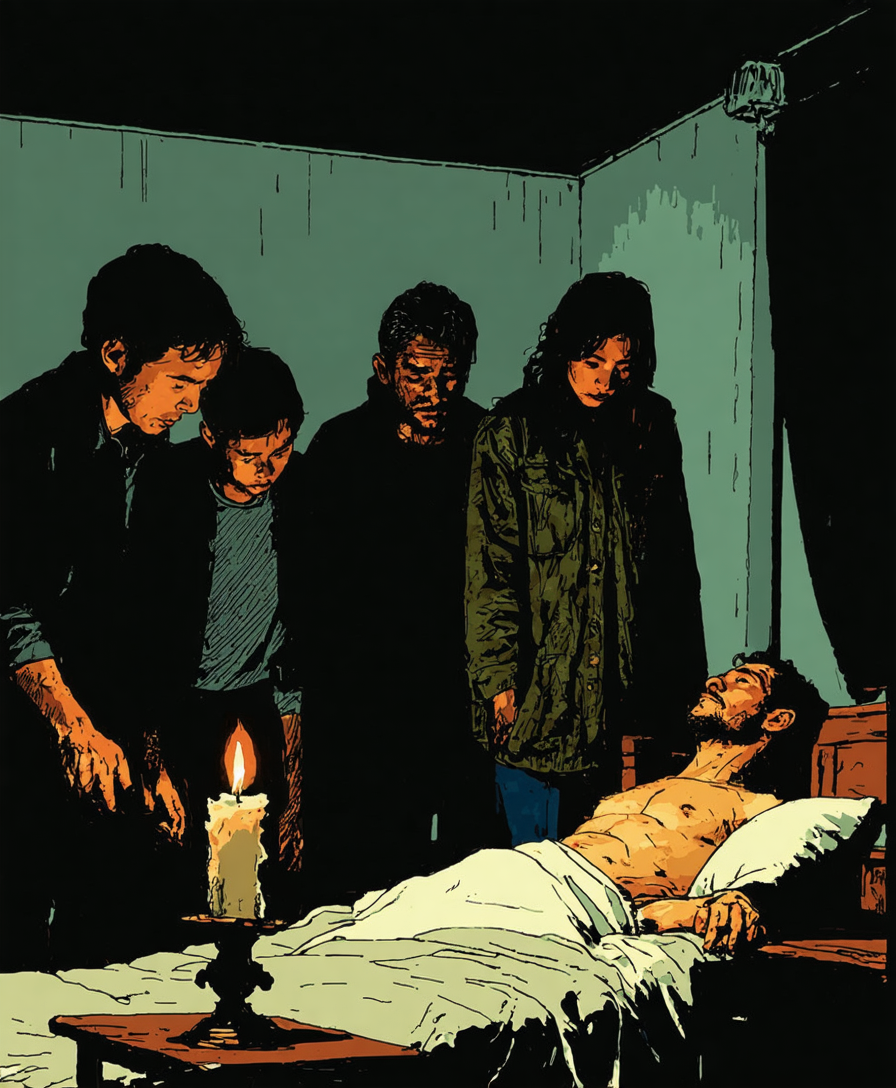
When a Patient Dies
It goes without saying that when my fellow volunteers and I meet a new patient for the first time, we know that, in short order, we will be saying goodbye for the last time. The end is always there, lurking in the background. The call can come at any moment and rarely aligns with the predictions made by medical professionals. All hospice workers are taught, in a cursory way, how to “deal” with this inevitability. Despite the foreknowledge and training, when that call comes, we must manage the grief that follows. If we are truly providing comfort and care, the loss of a patient will hurt.
A common approach in hospice work, including comfort caregiving, is to maintain emotional distance—not to get too close. This mirrors what other medical professionals are taught: protect yourself to preserve your ability to make unbiased judgments. In practice, this is rarely fully achieved. A being that is completely emotionally detached is incapable of truly caring. For me, this admonition against emotional involvement falls flat. I might as well be a robot.
“Grief is the price we pay for love.”
As a comfort caregiver volunteer, one of my primary goals is to provide genuine comfort, and to do that, I must build rapport with my patients. A perfunctory, distant, “just business” approach does not lead to comfort. I’ve even seen this detached style with my own doctors, during routine, non-life-threatening visits, and it was unpleasant. I can’t imagine how much more upsetting it would be for someone facing a serious illness.
Detachment is not conducive to being fully present with a patient, nor does it provide the respect and attention someone with limited time deserves. If I had little time left in this world, I would not want to spend it with a detached automaton. Loved ones must make medical decisions despite their deep care for the patient, and medical professionals often face heavy workloads that leave little room for meaningful interaction. Even so, a kind word or a look of understanding can go a long way toward a patient’s emotional comfort.
“One of the most important things you can do on this earth is to let people know they are not alone.”
As a volunteer, I usually care for no more than four patients at a time, which allows for a different experience. In fact, among all the professionals caring for hospice patients, volunteers often spend the most time with them.
Instead of being detached, I choose to care deeply. I strive to form meaningful connections with each patient and make them a part of my life. Since their time is limited, I work intentionally to connect with them. This effort and caring make it more painful when a patient dies, especially those I have spent months with over dozens of visits. It hurts when I lose a patient. Each becomes a part of my life, and when they pass, I must reassemble my world around the new reality and move through a grief process.
To be clear, the grief I experience is not on the same scale as losing a loved one. Losing a patient does not compare to the completely debilitating grief I felt when my brother died. Still, it hurts, especially when I’ve grown close to someone, and I must work through it. I don’t think I become accustomed to loss or any more able to grapple with it—it remains a meaningful and painful part of the work.
The mechanics around a patient’s death are always the same. My volunteer coordinator contacts me immediately, and sometimes family members notify me first, particularly if we’ve formed a connection. If there is time for a vigil, I get to say a final goodbye. Often, when I’ve built relationships with family members, I’m invited to the funeral, memorial, or life celebration.
I enjoy my time with each patient, who become part of my life. I visit once a week, for one to four hours depending on their energy and other commitments. Some patients enter hospice early and I spend dozens of weeks with them. When they die, it leaves a hole in my routine and reality.
“Birth and death are the sacred bookends to our lives. So why do we prepare so thoughtfully and carefully for one and not at all for the other?”
Even so, I gain far more joy than sorrow from hospice work. Every bit of sadness is outweighed by the reward of becoming a part of another person’s life. Families are always grateful for the connection I create with their loved ones and the respite I provide.
After a patient dies, I reflect on what I learned from them. People facing certain and imminent death are laid bare. There is rarely any pretense. Often, they speak from the heart, offering a unique glimpse into their life lessons and reflections.
I pay attention not only to their words but also to what is implied or left unsaid. Nonverbal patients communicate in their own ways, and even brief interactions can teach valuable lessons. By observing their demeanor and speaking with loved ones, I gain insight into the tenor and meaning of their lives. We are social beings, communicating in some form up to our last breath.
I always find something in each patient worth learning from or emulating. When a patient dies, I carry a part of them with me. Over the past seven years, I’ve sat with more than fifty patients, and remembering them is part of my service. By recounting my experiences and sharing the lessons I learned, I help preserve their legacy.
“Birth and death are only doors through which we pass, sacred thresholds on our journey... a game of hide-and-seek.”
Being invited to a memorial or celebration of life is an honor. It usually occurs with patients I’ve known for a while, along with their families. Attending helps me process grief and allows me to meet more people from the patient’s life. Sometimes I maintain contact with the family over the years. One spouse, for instance, checks in every few months to trade recipes. These small connections offer comfort to families who appreciate having someone who knew their loved one at the end of life.
When a patient dies, there’s both an administrative process and my personal way of processing the loss. I reflect, grieve, and crystallize the lessons learned. The sadness is present, but manageable. Most hospice patients have lived long lives, leaving many friends and family to grieve and carry on their legacy. Death is as natural and significant as birth, and we would do well to honor both with equal attention.